Objavljeno: 19.2.2026 | Posodobljeno: 6.3.2026
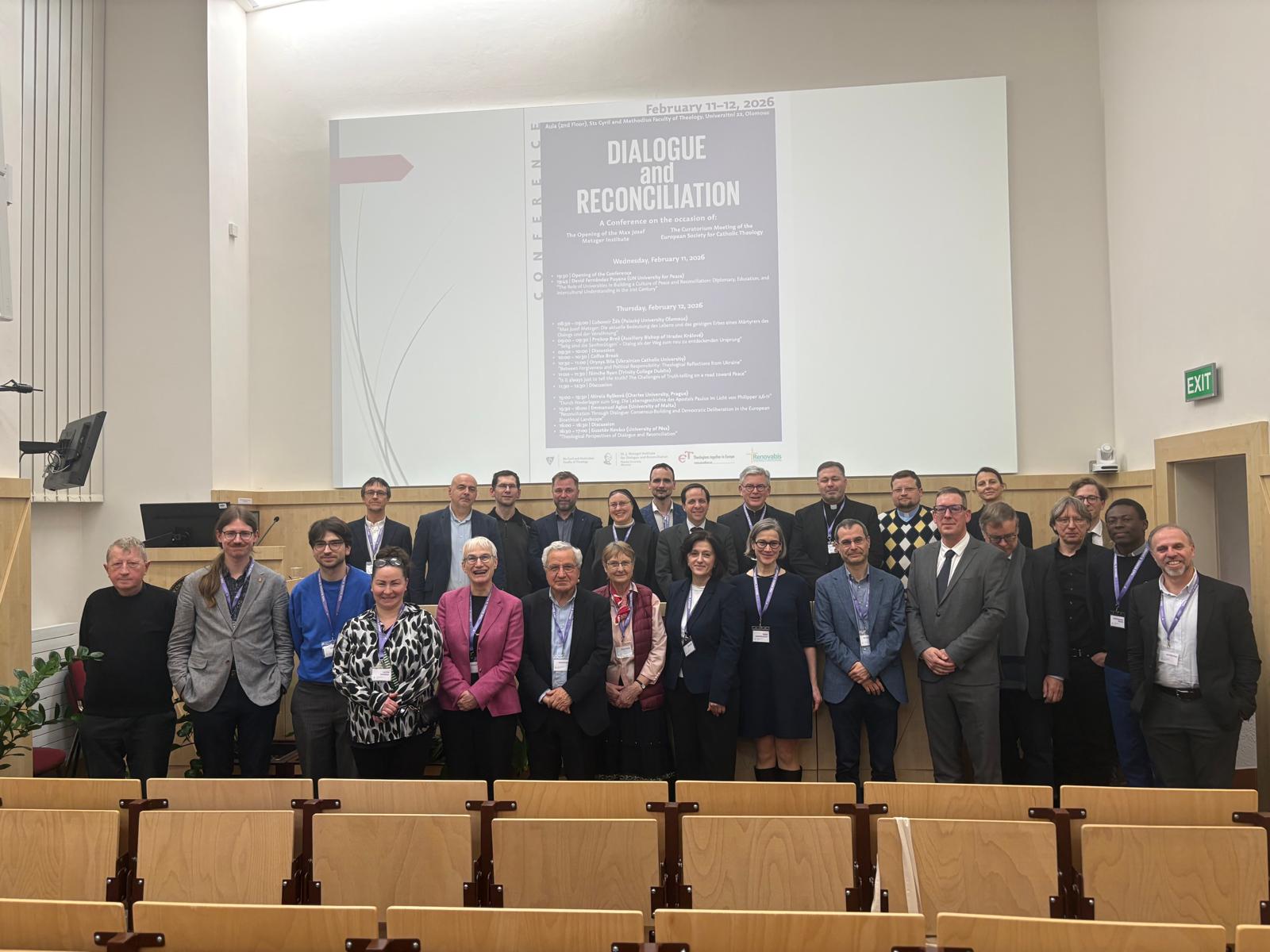
Between 11 and 14 February 2026, a meeting of the Curatorium of the European Association of Catholic Theologians (ET/ESCT) was held in Olomouc, Czech Republic. The meeting was linked to the scientific conference Dialogue and Reconciliation, hosted by the Faculty of Theology of St Cyril and Methodius at Palacký University Olomouc. The conference, organised by the Faculty of Theology of St Cyril and Methodius and the Max Josef Metzger Institute, brought together theologians, ethicists, sociologists, and political scientists.
The event addressed theological, ethical, social, and political aspects of contemporary efforts for peace and reconciliation in a world marked by conflict, polarisation, and social tensions. Eight renowned lecturers from various European universities participated in the conference. The introductory lecture, entitled The Role of Universities in Building a Culture of Peace and Reconciliation: Diplomacy, Education, and Intercultural Understanding in the 21st Century, was delivered by David Fernández Puyana, an expert in international law and human rights at the United Nations University for Peace (UN University for Peace). He emphasised the importance of education for peace, ethical values, and the education of young people and future leaders who will be capable of dialogue, responsible action, and building a more just society in a global environment.
Other lecturers contributed profound theological reflections on dialogue and reconciliation, offering insights into the spiritual legacy of Max Josef Metzger, dialogue as a path to the source of Christian faith, the relationship between forgiveness and political responsibility in the context of the war in Ukraine, the challenges of truthfulness on the path to peace, reconciliation through dialogue in the European bioethical space, and a comprehensive theological perspective on dialogue and reconciliation in the modern world.
The meeting of the ESCT curatorium was particularly important, as regular meetings of representatives of national sections enable the systematic exchange of experiences, the coordination of common orientations, and the strengthening of the common identity and mission of the European Society for Catholic Theology.
The meeting in Olomouc made an important contribution to deepening theological reflection on dialogue and reconciliation and strengthening cooperation among European Catholic theologians. At the same time, it confirmed the important role of universities, especially theological institutions, as places of critical thinking, education for peace, and responsible engagement with the challenges of contemporary society.
Mateja Pevec Rozman,
President of the Slovenian Section of the ESCT