Objavljeno: 8.7.2026 | Posodobljeno: 8.7.2026
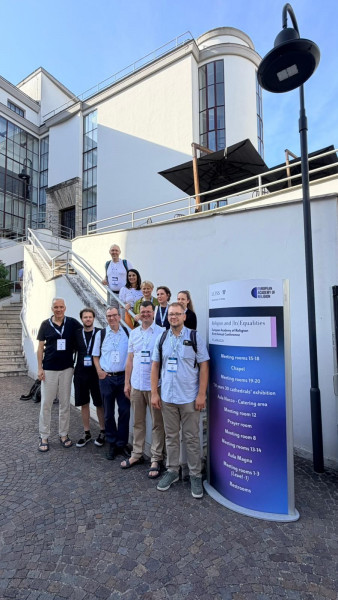
Between 30 June and 3 July 2026, the 9th Annual Conference of the European Academy for Religion – EuARe 2026 – took place in Rome. The conference, held under the overarching theme “Religion and (In)equalities,” was hosted by LUISS Guido Carli University.
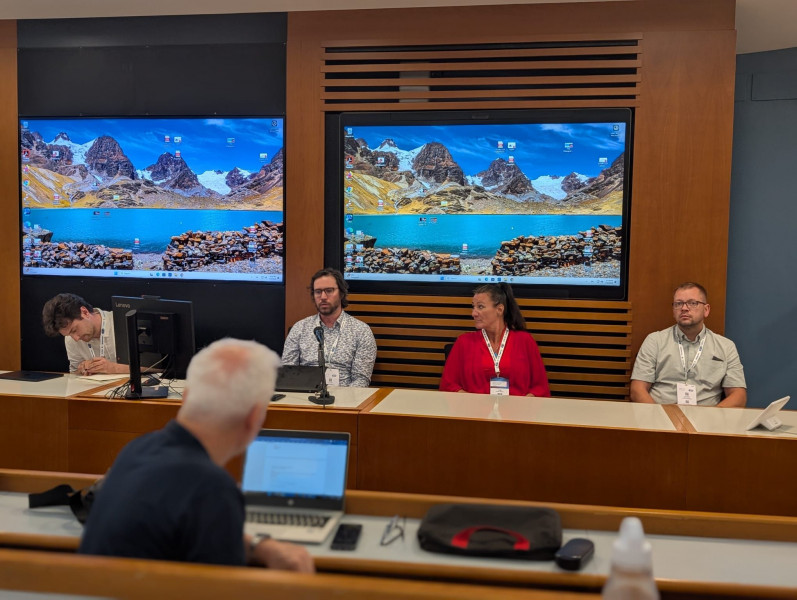
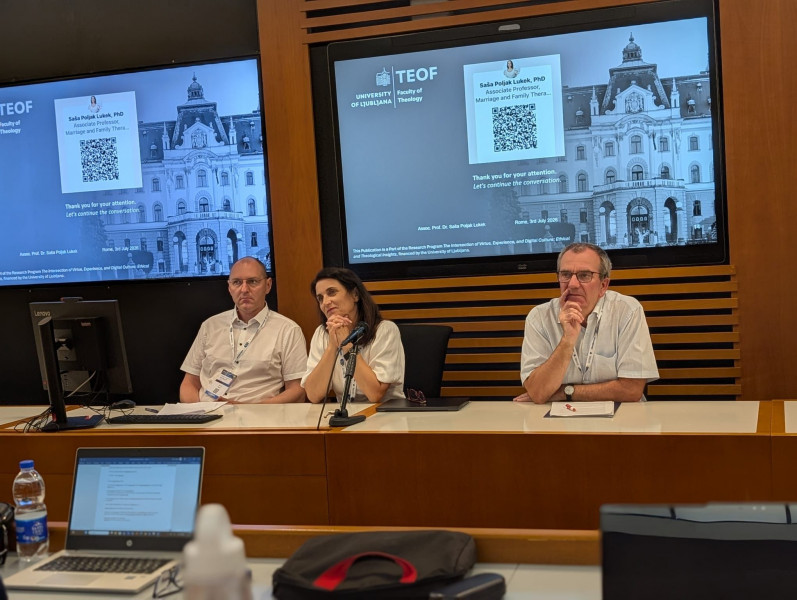
The Faculty of Theology, University of Ljubljana, participated in the conference with a full-day panel titled “Perception and Understanding of Artificial Intelligence: Theological, Philosophical, Anthropological, and Ethical Perspectives,” which took place on 3 July. The panel was organised as part of the research project “Theology and Digitalization: Anthropological and Ethical Challenges” (J6-60105), funded by ARIS and led by the Faculty of Theology at the University of Ljubljana (headed by Prof Dr Bojan Žalec).
The purpose of the panel was to reflect on how the rapid development of artificial intelligence is changing humanity’s understanding of itself, others, and the world, and what challenges this poses for theology, philosophy, ethics, anthropology, and the social sciences. The panel was based on the recognition that artificial intelligence is no longer merely a technical tool but is increasingly appearing as a conversation partner, decision-maker, mediator of knowledge, social actor, and (virtual) social presence. The central aim of the discussion was therefore to shed light on how theology, philosophy, and other humanities and social sciences can contribute to a responsible, critical, and human-centred understanding of digitalisation and the ethical regulation of AI.
Contributions were provided by faculty members of the Faculty of Theology at the University of Ljubljana and members of the “Theology and Digitisation” project group:
Mateja Centa Strahovnik, Nadja Furlan Štante, Roman Globokar, David Kraner, Jonas Miklavčič, Saša Poljak Lukek, Barbara Simonič, Stjepan Štivić, Tanja Valenta, Janez Vodičar, and Bojan Žalec. In addition, researchers from abroad also participated in the panel with presentations, giving the discussion a distinctly international and interdisciplinary character.
The individual presentations addressed various dimensions of the human encounter with artificial intelligence: from questions of autonomy, responsibility, and trust to the impact of artificial intelligence on education, moral formation, clinical decision-making, spiritual discernment, religious experience, and (inter)human relationships. Additionally, specific attention was given to issues of empathy, vulnerability, embodiment, identity, and human freedom in a digitally transformed world. Participation in the EuARe conference thus made a significant contribution to the international presentation of the research work of the Faculty of Theology at the University of Ljubljana in the fields of theology, ethics, and digitisation.